What makes cotton good: staple length, combing, and why 100 per cent cotton tells you almost nothing
Every cotton garment says 100 per cent cotton. The differences that matter are all one level below that label.
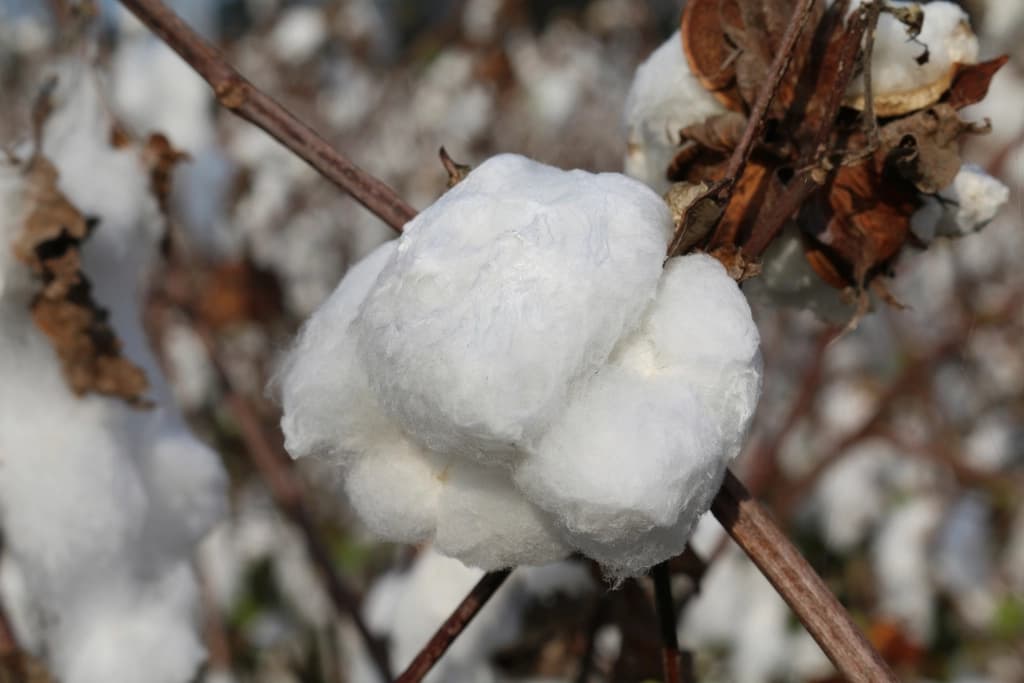
One hundred per cent cotton appears on a coarse vest that pills in a month and on a shirt that gets better for a decade. The fibre is the same species; almost everything else is different.
Staple length is the master variable
Staple length means the length of the individual fibres. Longer fibres twist into smoother, stronger yarn with fewer ends poking out of the surface - which is what pilling is.
| Class | Roughly | Result |
|---|---|---|
| Short staple | under about 25 mm | Coarse, weaker, pills quickly; the cheapest cotton |
| Medium staple | about 25 to 28 mm | Everyday mass-market fabric |
| Long staple | about 28 to 34 mm | Smooth, durable, noticeably better hand-feel |
| Extra-long staple | 34 mm and above | Silky, strong, expensive - Giza, Pima, Supima, Suvin |
This single variable outranks thread count, GSM and brand. A 300 thread-count sheet in long-staple cotton beats a 600 thread-count sheet in short-staple cotton, and usually costs less.
Combed versus carded
Carding cleans and aligns fibres. Combing is an extra step that removes the shortest fibres and remaining impurities before spinning, leaving only the longer, more uniform ones.
Combed cotton is smoother, stronger, less prone to pilling, and costs more - which is exactly why brands that use it say so on the label. A listing that stays silent about it is usually carded.
Two words to look for: combed and bio-washed. The first is a quality step, the second a finishing step that removes surface fuzz and reduces pilling. Both are cheap to mention and expensive to do, so brands mention them when they have done them.
Yarn count and weave
Yarn count describes fineness - a higher number means finer yarn. Shirting is often sold as 40s, 60s, 80s or higher, with finer counts giving lighter, smoother, more expensive cloth that is also more delicate.
- Poplin: smooth plain weave, crisp, the classic formal shirt.
- Twill: diagonal weave, softer, drapes well, resists creasing better than poplin.
- Oxford: basket-like weave, textured and durable; the everyday casual shirt.
- Chambray: plain weave with a coloured warp and white weft; looks like denim, wears like a shirt.
- Voile and mulmul: very light, open weaves - the traditional answer to Indian summers.
- Jersey: knitted rather than woven; this is t-shirt fabric.
Indian cottons worth knowing
- Shankar-6: the widely grown long-staple variety behind much of Indian quality cotton.
- Suvin: extra-long staple, limited production, exceptional and expensive.
- Khadi: hand-spun and hand-woven; the appeal is the texture and the process rather than a fineness metric.
- Malmal or mulmul: fine, sheer and cool, historically the fabric of Indian summers.
- Organic cotton: a farming claim, not a quality claim. It can be short staple. Look for GOTS certification if the claim matters to you.
Judging it by hand
In a shop, four quick tests tell you most of what a listing will not.
- Hold it to the light. An even, consistent weave means even yarn; cloudy patches mean uneven spinning.
- Rub the surface briskly between your fingers. Fuzz appearing immediately suggests short fibres and future pilling.
- Scrunch it and release. Good cotton creases, then relaxes; poor cotton creases and stays creased.
- Check the seams and the collar construction. Finishing quality correlates with fabric quality more often than not.
Then wash it well. Cold water, inside out, no overloading, dried in shade rather than direct sun. Fabric quality decides how long a garment can last; laundry decides whether it does.
Every score on Filtizy is shown working
The factors, weights and thresholds behind a product's number are published in full - including the ones we consider weak.
Comments
Loading comments…