Buying nuts and dry fruits in India: grades, storage, and the portion nobody keeps to
The healthiest aisle in the shop is also the easiest one to overspend on, in rupees and in calories.
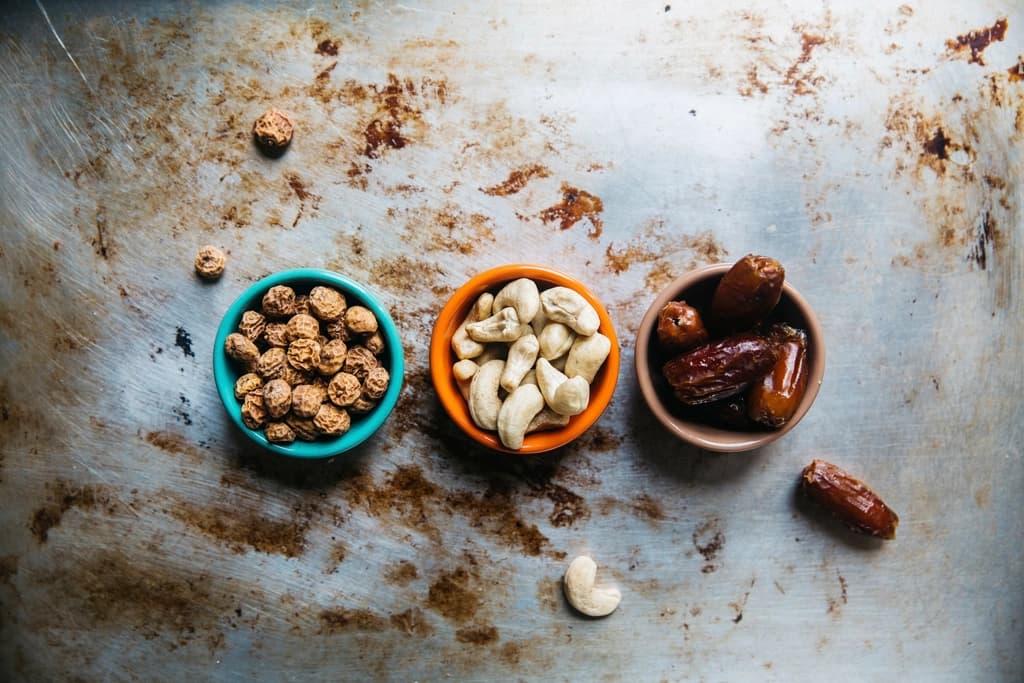
Nuts are among the few foods where nutrition advice, taste and tradition all agree. They are also expensive, easy to spoil, sold in a confusing grading system, and calorie-dense enough that the difference between a handful and a bowl is about four hundred calories.
What the grades mean
Cashew grades are the most standardised thing in the aisle. W-180, W-210, W-240, W-320 and W-400 refer to whole kernels and approximately how many make up a pound - so a lower number means a larger nut. W-180 is the largest and most expensive; W-320 is the everyday grade most households buy.
Broken grades - splits, butts, pieces - are the same cashew at a considerably lower price. For anything cooked, ground into a gravy or chopped into a dessert, buying wholes is spending money on an appearance nobody will see.
Almond names generally indicate origin and shape rather than a formal grade: California, Mamra, Gurbandi. Mamra almonds command a premium for flavour and oil content. For everyday eating, the price gap is much larger than the nutritional gap.
Raw, roasted, salted, flavoured
| Form | What changes | Worth buying when |
|---|---|---|
| Raw | Nothing added; you control the rest | You will roast or soak them yourself |
| Dry roasted, unsalted | Flavour improves; nutrition barely moves | Default choice for most households |
| Oil roasted, salted | Added fat and often 400 mg or more of sodium per 100 g | Occasional snacking, knowingly |
| Flavoured or coated | Added sugar, starch coatings, sometimes maida | Treat it as a snack product, not as nuts |
Dried fruit deserves its own warning. Dates, raisins, figs and apricots are dense in natural sugar, and many packs add more. A handful of raisins is nutritionally nothing like a handful of almonds - check whether sugar or glucose syrup appears in the ingredients list, and whether sulphur dioxide has been used as a preservative, which must be declared.
Storage, because rancidity is the real risk
Nuts are high in unsaturated fat, which oxidises. Rancid nuts taste bitter and sharp, and the change is gradual enough that people often blame the brand rather than the storage.
- Airtight container, away from light and heat. The shelf above the stove is the worst place in the kitchen.
- Refrigerate what you will use within a couple of months; freeze the rest. Both work well, and freezing does not damage texture.
- Buy pack sizes you will finish. A bargain kilo that goes rancid at month four was not a bargain.
- Shelled nuts spoil faster than nuts in shell; ground nut flours and nut butters faster still.
- Smell before you serve. Fresh nuts smell sweet and faintly milky; rancid ones smell like old paint.
Aflatoxin, in proportion
Aflatoxins are toxins produced by moulds that grow on poorly stored groundnuts, maize, chillies and tree nuts in warm, humid conditions. India regulates limits for them, and organised suppliers test for them.
For a home buyer this is a storage and sourcing question rather than a reason for anxiety. Buy sealed, dated packs from sellers with turnover; avoid loose stock sitting open in humid weather; discard any nut that is shrivelled, discoloured or tastes musty rather than eating around it.
The portion that people actually skip
A sensible daily portion is roughly 25 to 30 g - about a small handful. Almonds run about 580 calories per 100 g, cashews about 550, walnuts over 650. Two casual handfuls while working is easily 400 calories, which is a meal.
The practical fix is portioning at purchase rather than at eating: decant into a small jar for the week and leave the big pack somewhere inconvenient. Nuts are a genuinely good food that people manage to overeat precisely because they know it.
Every score on Filtizy is shown working
The factors, weights and thresholds behind a product's number are published in full - including the ones we consider weak.
Comments
Loading comments…