Instant noodles and ready meals: how to choose the least bad one, honestly
Nobody is giving these up at 11 pm. So here is what separates a defensible pack from an indefensible one.
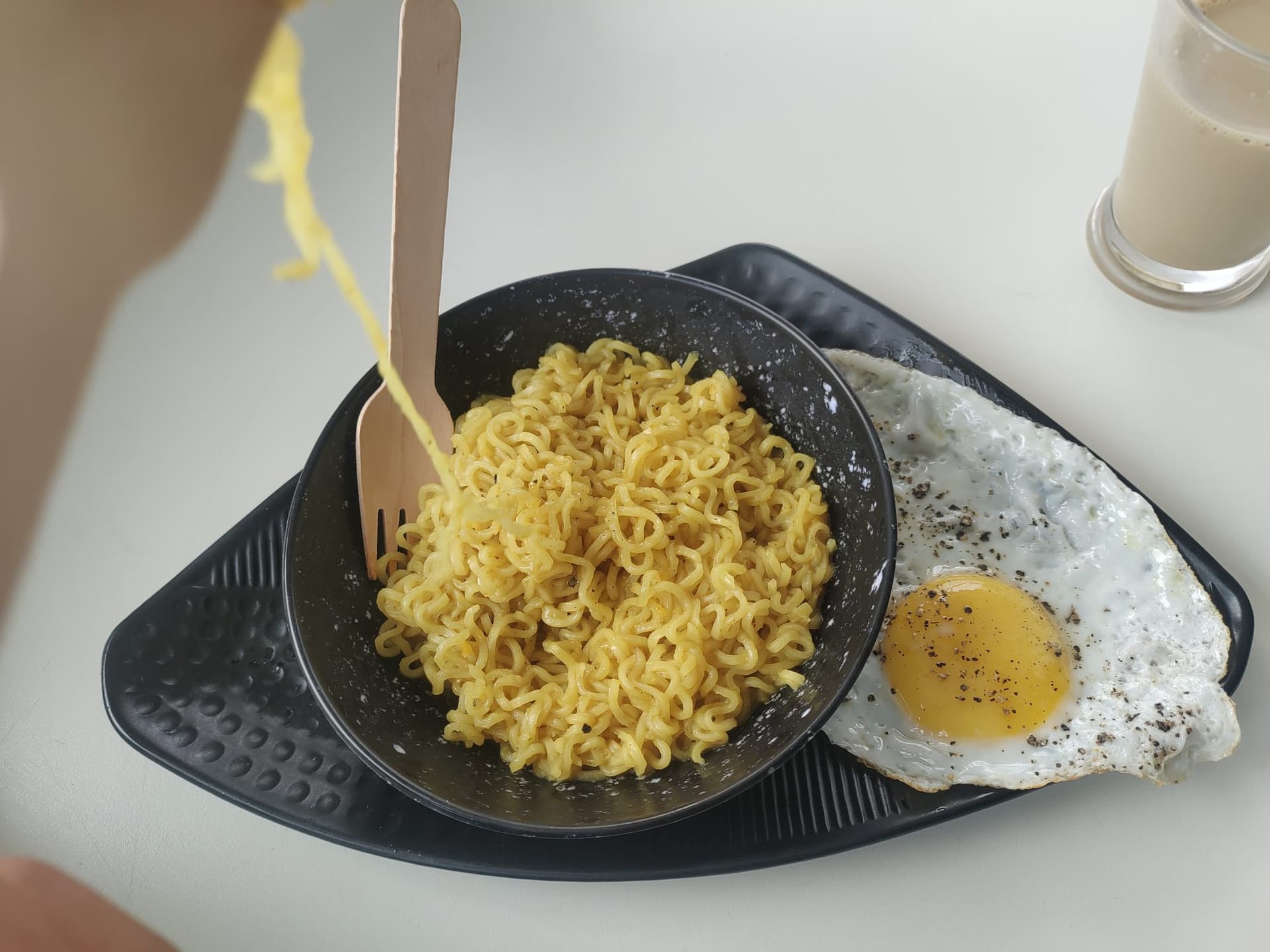
Advice that begins with give up instant noodles is advice nobody follows. The category exists because it solves a real problem: food in four minutes, at a price a student can afford, with a shelf life measured in months. The useful question is which pack, and what you add to it.
What the panel usually shows
Three things characterise the category, and all three are visible on the back.
- Sodium. Most of it is in the tastemaker sachet, and a single pack can carry 1.5 to 2.5 g of salt equivalent.
- Fat, usually palm oil, because the noodle cake is typically fried before drying. That puts saturated fat higher than people expect.
- Refined flour, so fibre is low and protein is modest unless something has been added.
There is also a portion problem. Many packs declare nutrition per serve while holding more than one serve, so the real numbers for one eaten pack are higher than the column you glanced at.
First check on any instant pack: is the panel per 100 g, per serve, or per pack, and how many serves does the pack claim to hold? Get that wrong and every other comparison is wrong too.
What separates the better packs
| Check | Better | Worse |
|---|---|---|
| Noodle cake | Air dried or baked | Fried |
| Flour | Whole wheat, millet or atta based | Refined flour only |
| Sodium per 100 g | Under about 700 mg | Over about 1200 mg |
| Protein per 100 g | Above 10 g | Under 7 g |
| Fibre per 100 g | Above 4 g | Under 2 g |
| Seasoning | Separate sachet you can portion | Pre-mixed into the cake |
Millet and atta variants are the most common real improvement on shelves now, and the ones worth comparing by panel rather than by front-of-pack claim - some are meaningfully higher in fibre and protein, and some are the same noodle with a different picture.
Three changes that do more than switching brands
- Use half the tastemaker. This single change removes roughly a gram of salt and is unnoticeable after two packs.
- Add protein: an egg, leftover dal, paneer, soya chunks or a handful of peanuts. It turns a refined-carbohydrate bowl into a meal that lasts.
- Add volume: frozen peas, carrot, capsicum, spinach. Fibre and bulk for almost no cost or effort.
A pack of noodles with an egg and a handful of vegetables is an ordinary meal. The same pack alone, twice a week, is a habit worth examining.
Ready-to-eat curries and cup meals
Retort-pouch curries are a different product with the same reading rules. They are cooked and sterilised in the pouch, which is why they keep without refrigeration and without preservatives - a point worth understanding, because preservative-free is a genuine claim here rather than a marketing one.
- Check sodium per 100 g first, then per pouch - portions are typically 250 to 300 g, so the pouch total is what you actually eat.
- Check the fat source. Palm oil and cream push saturated fat up quickly in gravies.
- Check what the pouch actually contains: a dal pouch that is mostly water and tomato is expensive water.
- Compare price per 100 g against the fresh version you would otherwise have cooked. Convenience has a price; it is worth knowing what it is.
The honest framing
The ICMR-NIN 2024 guidelines advise limiting high fat, sugar and salt foods and ultra-processed foods. Instant meals sit squarely in that description, and no brand choice moves them out of it.
What a better pack and a couple of additions do is change the frequency at which this matters. Twice a month, well supplemented, is a non-issue. Five nights a week, straight from the pack, is the pattern worth changing - and that is a schedule problem more than a shopping one.
Every score on Filtizy is shown working
The factors, weights and thresholds behind a product's number are published in full - including the ones we consider weak.
Comments
Loading comments…