Laundry symbols, finally explained - and the five habits that double how long clothes last
Five shapes carry the whole system. Once you know them, the tag stops being decoration.
A care label is the manufacturer telling you exactly how to avoid destroying the thing you just bought. It is written in symbols because it has to work across languages, and the system is smaller than it looks: five basic shapes, plus dots and bars.
The five shapes
| Symbol | Means | Read the detail as |
|---|---|---|
| Tub of water | Washing | Number inside is the maximum temperature in Celsius |
| Triangle | Bleaching | Crossed out means no bleach; two diagonal lines mean oxygen bleach only |
| Square | Drying | A circle inside means tumble dry; lines inside mean line or flat dry |
| Iron | Ironing | Dots set the temperature, one to three, low to high |
| Circle | Professional cleaning | Letters inside are instructions for the dry cleaner, not for you |
- Dots in a tub or drying square indicate temperature: one dot is low, two medium, three high.
- A hand in the tub means hand wash only.
- A crossed-out tub means do not wash at all - clean it professionally.
- A crossed-out twisted symbol means do not wring.
- A square with a diagonal line in the corner means dry in shade, which matters a great deal in Indian sun.
Dry clean only sometimes means the manufacturer never tested washing rather than that washing will destroy it. Structured tailoring, most silk and anything with fusing genuinely needs it. A simple wool knit or a rayon kurta is often hand-washable - but test on an inside seam first, and accept the risk is yours.
The five habits that matter more than the label
- Wash less. Most clothes need airing rather than washing. Jeans, knits and outerwear last dramatically longer with fewer cycles.
- Wash cold. Cold water protects colour, elastane and fibre, and saves electricity. Heat is what ages clothes fastest.
- Turn everything inside out. It protects the printed or dyed face of the fabric from abrasion against the drum.
- Do not overload. Clothes need room to move; overloading causes abrasion and poor rinsing, and detergent residue irritates skin.
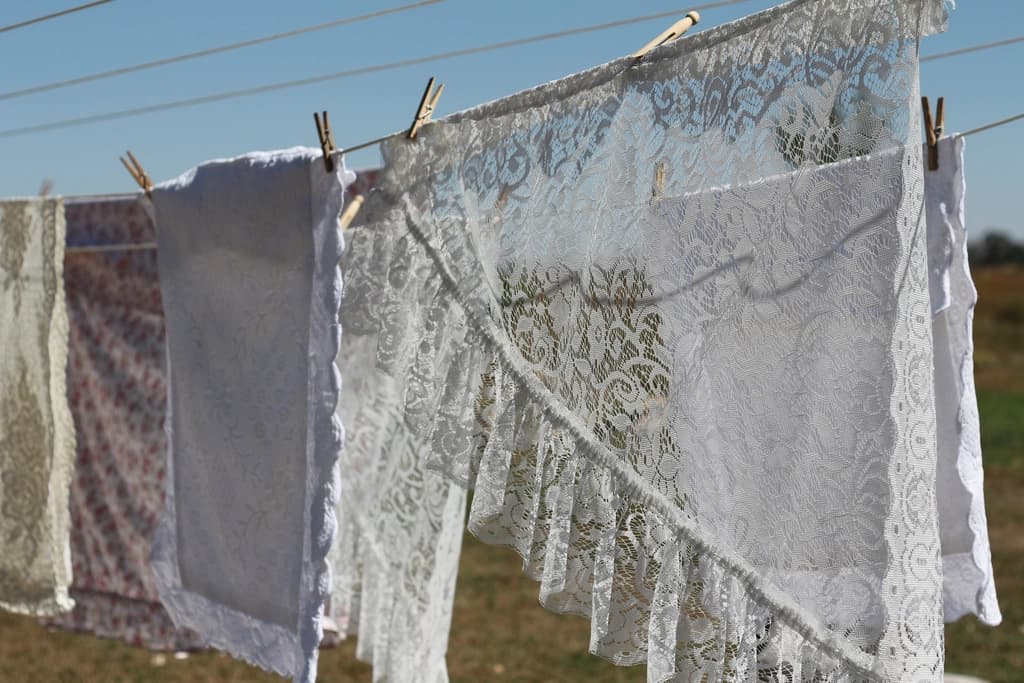
- Dry in shade. Indian sunlight is a powerful bleach. Direct sun fades coloured cotton quickly and weakens fibres over time.
Fabric-specific notes for Indian wardrobes
- Cotton: cold wash, shade dry, iron damp. Expect some shrinkage in the first wash unless it is pre-shrunk.
- Linen: creases by nature; that is the fabric, not a fault. Wash gently and iron while damp if you want it crisp.
- Silk: cold hand wash or dry clean, no wringing, never direct sun. Deodorant and perfume damage silk over time.
- Wool and pashmina: cold hand wash with a wool detergent, dry flat, never hang wet - it stretches out of shape.
- Rayon and viscose: weak when wet. Handle gently and avoid wringing; this is the fabric that most often comes out of a machine ruined.
- Synthetics: low heat everywhere. Polyester melts, and elastane degrades quickly with hot washes and hot drying.
- Embroidered and embellished wear: inside out, in a mesh bag, cold, or hand wash.
Storage, the part everyone skips
Monsoon humidity is what ruins stored clothes in India. Store everything completely dry, keep cupboards ventilated, and use neem, camphor or silica sachets rather than sealing cotton in plastic where it will mildew.
Fold knits rather than hanging them - hangers stretch shoulders permanently. Hang structured shirts and jackets on broad hangers. And keep silk and wool away from direct light, which fades them even in a cupboard with a glass door.
None of this is glamorous, and all of it is cheaper than replacing clothes. The most sustainable garment in anyone wardrobe is the one already in it, kept alive another two years.
Every score on Filtizy is shown working
The factors, weights and thresholds behind a product's number are published in full - including the ones we consider weak.
Comments
Loading comments…