Salt on the label: why 5 g a day disappears into namkeen, noodles and pickle
Panels declare sodium in milligrams. Advice is written in grams of salt. One division fixes the confusion for good.
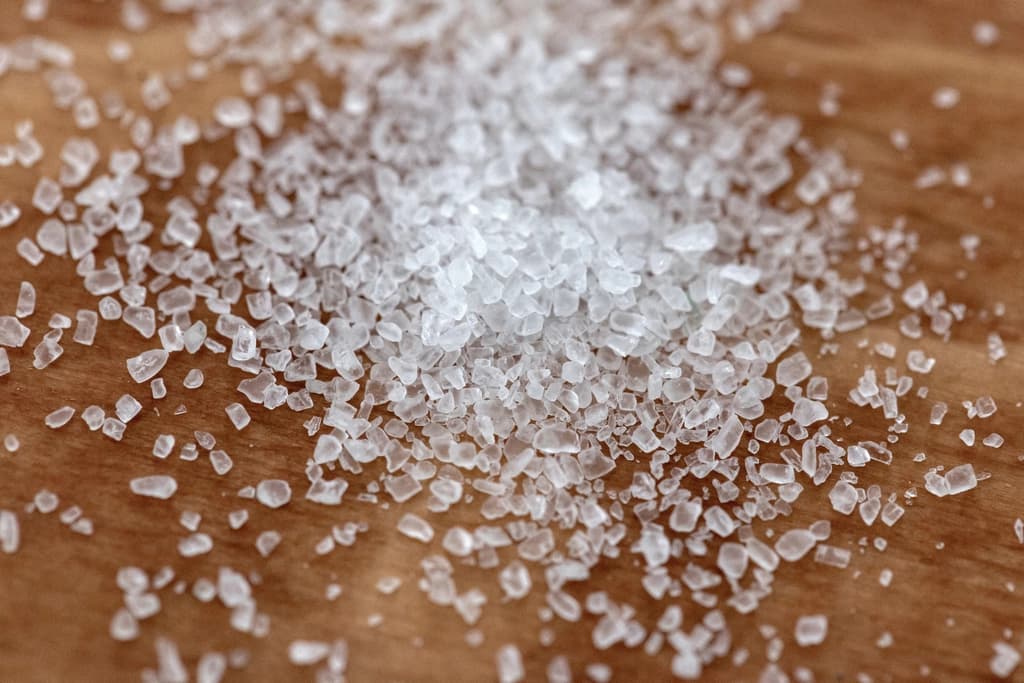
Both the WHO and the ICMR-NIN Dietary Guidelines for Indians put the ceiling at under 5 g of salt a day for an adult. Most Indian diets run well above it, and the surprising part is how little of the excess comes from the salt shaker.
The one conversion to memorise
Salt is sodium chloride, and sodium is about 40 per cent of it by weight. So sodium in milligrams divided by 400 gives salt in grams - accurate enough to shop with.
| Per 100 g on the panel | Salt equivalent | Read it as |
|---|---|---|
| Under 120 mg sodium | under 0.3 g salt | Genuinely low |
| 300 to 600 mg sodium | 0.75 to 1.5 g salt | Moderate - watch the portion |
| 800 to 1200 mg sodium | 2 to 3 g salt | High |
| Over 1500 mg sodium | over 3.75 g salt | Very high - a portion can spend the day |
Where Indian kitchens actually get their sodium
Cooking salt matters, but packaged and preserved foods concentrate it far more efficiently.
- Namkeen, bhujia and chips - frequently 1 to 2 g of salt per 100 g, and a 150 g family pack is rarely one portion.
- Instant noodles and instant soups - the tastemaker sachet carries most of it, which is why using half the sachet is a genuinely effective change.
- Pickle, papad and chutney powders - very high per gram, though the portions are usually small.
- Bread, rusk and bakery - modest per 100 g, but eaten daily and therefore cumulative.
- Processed cheese, butter, sauces, ketchup, soy sauce and ready masalas.
- Packaged dals, ready-to-eat curries and frozen snacks, where salt doubles as a preservative.
Sodium is not only in salty things. Raising agents and preservatives contribute it too - sodium bicarbonate in a biscuit, sodium benzoate in a drink - which is why a sweet product can still declare meaningful sodium.
Why it matters beyond blood pressure
High salt intake raises blood pressure, and blood pressure is the input that matters most for stroke and heart disease at a population level. India has a large and mostly undiagnosed hypertension burden, so the marginal value of reducing salt is unusually high here.
This is also a taste-adaptation story. Salt preference is learned, and it un-learns over a few weeks. People who cut back report that their old favourites start tasting harsh - which is the change doing its job, not a loss.
What low-sodium salt actually is
Low-sodium or lite salt replaces part of the sodium chloride with potassium chloride. For most people it is a reasonable way to cut sodium without cutting flavour.
It is not for everyone, though. People with chronic kidney disease, and people on potassium-sparing diuretics, ACE inhibitors or ARBs, can accumulate potassium dangerously. That is a conversation with a doctor, not a supermarket decision.
One more thing to preserve: iodine. India fortifies salt with iodine for good reason, and the switch to fancy rock or sea salts is a real loss if it becomes the only salt in the house. Check that whatever you buy says iodised.
Six changes that add up
- Use half the tastemaker sachet in instant noodles. Nobody notices after two packs.
- Buy the plain version of a snack and season it yourself - you will use less than the factory did.
- Compare two brands of the same snack on sodium per 100 g. The spread between brands is often twofold.
- Rinse canned pulses and vegetables; a fair share of the sodium leaves with the liquid.
- Treat pickle and papad as condiments rather than sides.
- Taste before you salt. Adding salt reflexively at the table is the easiest habit on this list to drop.
Sodium carries a deliberately modest weight in the Filtizy food score, because within a category the spread is narrow and the portion size does most of the work. It still separates the best and worst options in the snack aisle, and that is where you should look at it hardest.
Every score on Filtizy is shown working
The factors, weights and thresholds behind a product's number are published in full - including the ones we consider weak.
Comments
Loading comments…