How much added sugar is too much? The 25 g line and where it hides on Indian packs
ICMR-NIN puts an adult ceiling at roughly 25 to 30 g of added sugar a day. One sweetened drink can spend all of it.
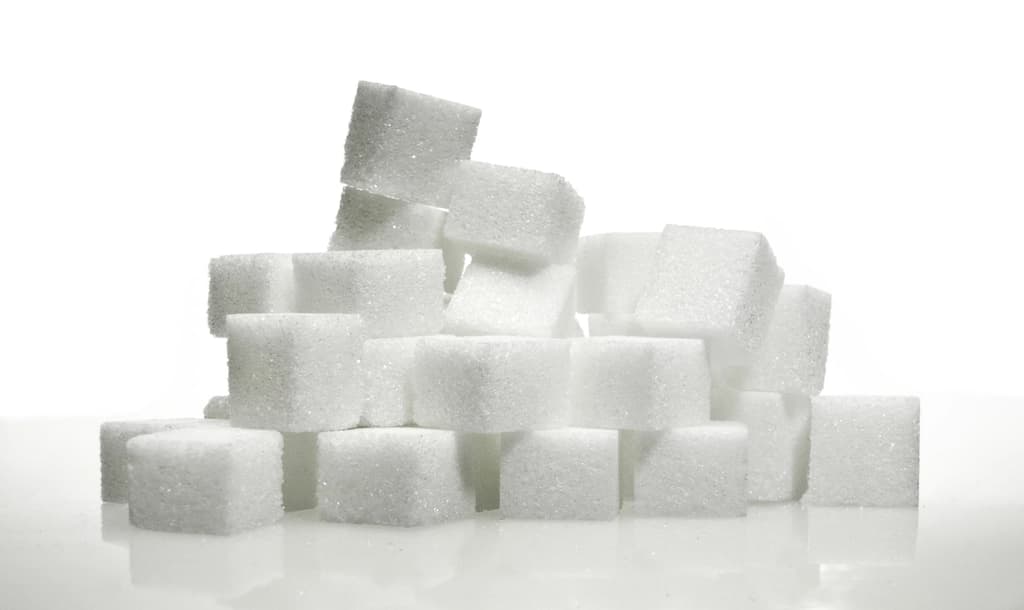
The 2024 edition of the ICMR-NIN Dietary Guidelines for Indians is unusually blunt about sugar: keep added sugar to a minimum, and in practice under about 25 to 30 g a day for an adult. The WHO puts the same idea differently - free sugars under 10 per cent of daily energy, and ideally under 5 per cent.
Twenty-five grams is five teaspoons. It sounds like a lot until you price a few ordinary purchases against it.
Where the budget actually goes
| Item | Typical added sugar | Share of a 25 g day |
|---|---|---|
| One 250 ml sweetened aerated drink | about 25 g | the whole day |
| One 200 ml sweetened flavoured milk | about 18 g | roughly three quarters |
| Two cream biscuits | about 10 g | about 40 per cent |
| One cup of chai with two spoons of sugar | about 10 g | about 40 per cent |
| One 30 g serving of frosted breakfast cereal | about 9 g | about 35 per cent |
| One fruit yoghurt cup, 100 g | about 12 g | roughly half |
| One 20 g chocolate bar | about 11 g | roughly 45 per cent |
Two of these in a day and the budget is gone before dinner. That is the actual point of the number: it is not a ban on dessert, it is an argument for choosing which sugar you spend it on.
Added sugar versus total sugar
Indian labels declare both, and they answer different questions. Total sugar includes sugars that were already in the ingredients - lactose in milk, fructose in fruit. Added sugar is what the manufacturer put in.
So a plain curd showing 4 g of total sugar and 0 g of added sugar is not a sweetened product; a fruit yoghurt showing 14 g total and 12 g added is. The gap between the two columns is the most informative thing on many panels.
Juice is the awkward case. Fruit juice concentrate used as a sweetener behaves like sugar in the body, and a pack with zero declared added sugar can still deliver 20 g of sugar per glass. Check the total sugar column too.
The names sugar hides behind
Ingredients are listed in descending order by weight. Splitting one sweetener into three named ones pushes each further down the list without changing what is in the pack. Learn to read past that.
- Sugar, cane sugar, brown sugar, demerara, jaggery, khandsari
- Invert sugar, liquid glucose, glucose syrup, dextrose, maltose, maltodextrin
- High fructose corn syrup, fructose, corn syrup solids
- Honey, date syrup, malt extract, fruit juice concentrate
- Anything ending in -ose that is not a protein or a fibre
Jaggery and honey deserve a specific mention because they are marketed as the virtuous alternatives. Nutritionally they are sugar with traces of minerals. If a biscuit is sweetened with jaggery rather than refined sugar, it is still a sweet biscuit - the trace mineral content is not a meaningful contribution to anybody diet.
What the claim words mean
Claim wording in India is governed by the FSS (Advertising and Claims) Regulations, 2018, whose Schedule I defines each phrase against a measurable threshold. Two are worth memorising.
- Sugar free means not more than 0.5 g of sugar per 100 g or 100 ml. It says nothing about calories - a sugar-free biscuit can be almost entirely fat and refined flour.
- No added sugar means none was added during processing. Naturally occurring sugars can still be substantial, which is how a no-added-sugar juice arrives with 22 g of sugar a glass.
- Unsweetened is not a defined claim in the same way - treat it as marketing and read the panel.
- Sugar-free products often use polyols such as maltitol or sorbitol, which carry their own mandatory advisory about laxative effects in larger amounts.
A practical way to cut without suffering
Trying to eliminate sugar usually fails within a fortnight. Reallocating it works better, and the arithmetic is simple: find the sugar you are not enjoying and spend it on the sugar you are.
- Sweetened drinks first. They deliver the most sugar with the least satiety - the single highest-yield swap available.
- Breakfast second. A cereal at 20 g of added sugar per 100 g against one at 5 g is a free saving you will not taste after a week.
- Chai and coffee third. Dropping from two spoons to one is about 5 g a cup, several times a day.
- Keep the dessert you actually look forward to. A budget with nothing good in it does not survive.
One more habit worth building: compare on the per 100 g column, not per serve. Serving sizes are chosen by the manufacturer, and a 30 g serving of a cereal nobody pours 30 g of is the oldest trick on the shelf.
When you shortlist on Filtizy, added sugar carries the heaviest weight in the food scoring profile for exactly these reasons - it is the value most often high, least often necessary, and most reliably declared.
Every score on Filtizy is shown working
The factors, weights and thresholds behind a product's number are published in full - including the ones we consider weak.
Comments
Loading comments…