How to read an Indian food label in 90 seconds
Six things on the back of the pack, in the order a careful shopper checks them.
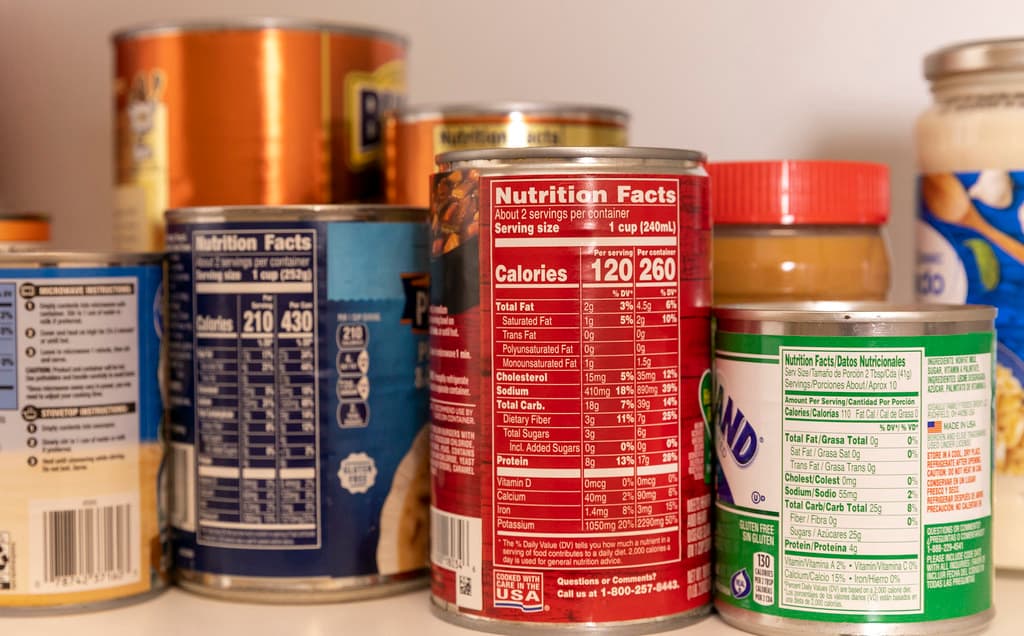
The front of a pack is marketing. The back is regulated. Under the Food Safety and Standards (Labelling and Display) Regulations, 2020, an Indian packaged food has to declare its nutrition per 100 g or per 100 ml, list its ingredients in descending order of weight, and carry an FSSAI licence number. Everything you need to judge a product is in those three places - the trick is the order you read them in.
1. Find the per 100 g column first
Most panels show two columns: per serve and per 100 g. Read the per 100 g column. It is the only one that lets you compare two packs, because the serving size is chosen by the manufacturer and the 100 g basis is not.
This matters more than it sounds. A serving of 30 g on a biscuit pack is roughly three biscuits. If the sleeve holds fifteen and you eat six, the panel you just read describes a third of what you ate. The per 100 g column is immune to that.
Rule of thumb: use per 100 g to choose between products, and per serve to work out what you are actually eating. They answer different questions, and mixing them up is the most common label mistake there is.
2. Read added sugar, not total sugar
Indian labels declare both. Total sugar includes the sugar that was always in the food - the lactose in milk, the fructose in fruit. Added sugar is what was put in during manufacturing, and it is the number that matters for a packaged snack.
The ICMR-NIN Dietary Guidelines for Indians, updated in 2024, put a ceiling of roughly 25 to 30 g of added sugar a day for an adult. That is one sweetened beverage. Hold that number in your head while you read the panel and the arithmetic does itself.
3. Convert sodium into salt
Panels usually declare sodium in milligrams, while dietary advice is written in grams of salt. The conversion is worth memorising.
| What the panel says | What it means in salt | Share of a 5 g daily limit |
|---|---|---|
| 400 mg sodium | about 1.0 g salt | about 20 per cent |
| 800 mg sodium | about 2.0 g salt | about 40 per cent |
| 1200 mg sodium | about 3.0 g salt | about 60 per cent |
| 2000 mg sodium | about 5.0 g salt | the whole day |
Namkeen, instant noodles, soups, sauces, papad and processed cheese are where this goes wrong fastest. A single pack of masala noodles can carry most of a day of salt before anything else you eat is counted.
4. Read the first three ingredients
Ingredients are listed in descending order of weight. The first three are usually most of the product. If sugar, refined palm oil or maida is among them in something sold as healthy, the front of the pack and the back of the pack are telling you different stories.
Watch for sugar appearing under several names in one list - sugar, invert sugar, liquid glucose, maltodextrin, honey, fruit juice concentrate. Split across four entries, each individually ranks lower than the single combined entry would.
5. Scan the additive numbers
India uses INS numbers for additives, printed next to their function - INS 330 is citric acid, INS 322 is lecithin, both entirely ordinary. Long additive strings are not automatically dangerous; they are a signal of how far the product is from its raw ingredients, which is what our processing factor measures.
- A green dot means vegetarian, a brown or maroon dot means non-vegetarian - mandatory in India.
- Allergen declarations for milk, soy, wheat, peanuts, tree nuts, fish and more are required when present.
- Foods with added caffeine, polyols or certain sweeteners must carry their own cautionary statements.
- Fortified foods carry the +F logo; iodised salt, fortified oil, fortified atta and fortified rice all use it.
6. Check the FSSAI number, the date and the storage line
Every packaged food sold in India carries a 14-digit FSSAI licence or registration number under the FSSAI logo. It identifies the manufacturer or packer and is searchable on the FSSAI portal. No number, or a number that goes nowhere, is a good enough reason to put the pack down.
Then the date. Best before is a quality date - the manufacturer estimate of how long the product stays at its best - while use by or expiry is a safety date. Both are only valid under the stated storage conditions, which is why an oil that says store away from sunlight and has sat in a lit shop window is not the product the label describes.
The 90-second version
- Per 100 g column, not per serve.
- Added sugar against a 25 to 30 g daily budget.
- Sodium in mg divided by 400 gives salt in grams; the daily budget is 5 g.
- First three ingredients decide what the product really is.
- Additive string length tells you how processed it is.
- FSSAI number present, date valid, storage line honoured by the shop.
That is the same sequence our catalogue team follows when a product is added to Filtizy, and roughly what the food scoring profile automates. Doing it by hand once or twice is the fastest way to learn what a score is actually summarising.
Every score on Filtizy is shown working
The factors, weights and thresholds behind a product's number are published in full - including the ones we consider weak.
Comments
Loading comments…